Geographic Centre
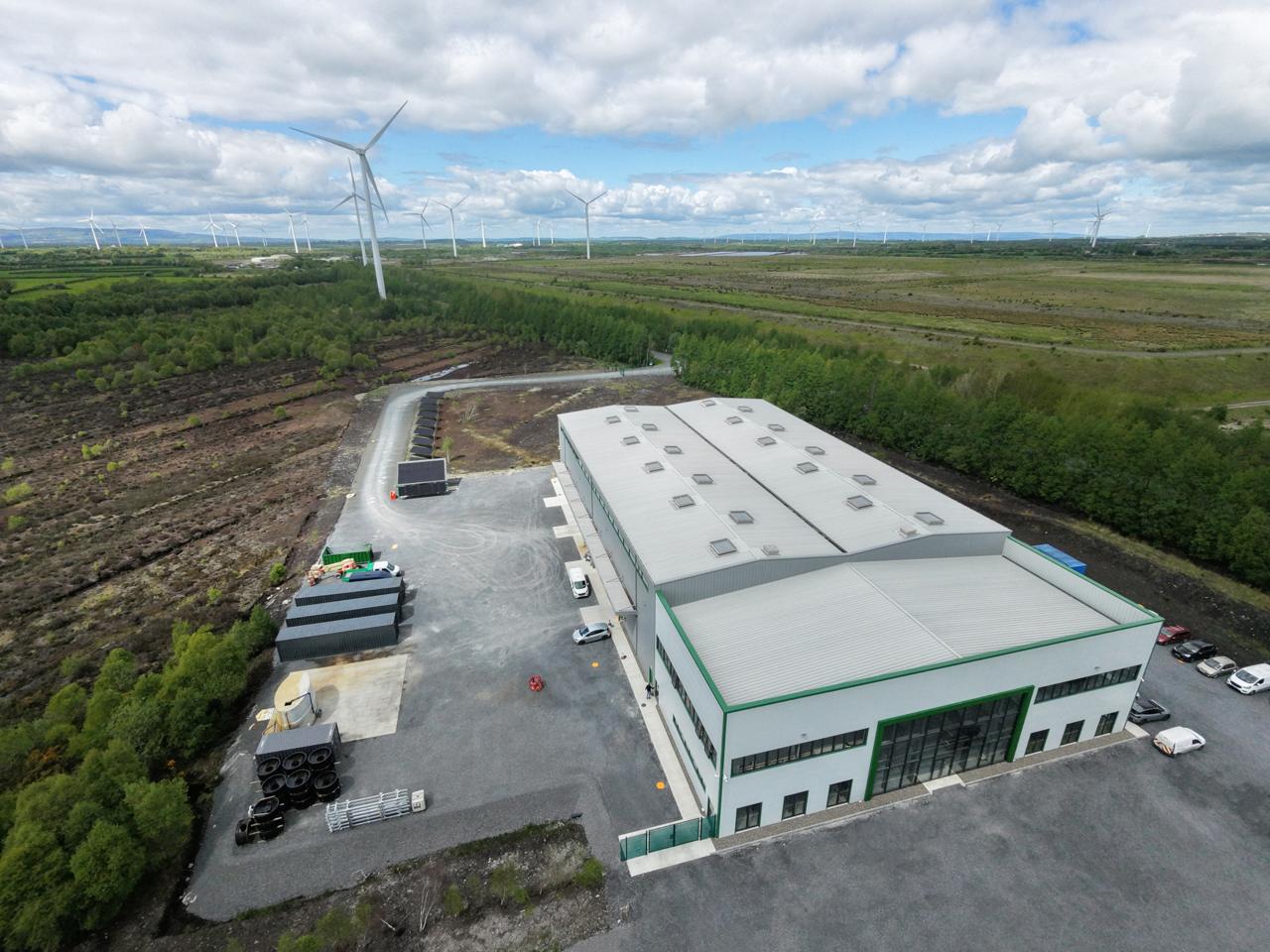
Revive Eco Park is located at the centre-point of the Mid-Tipperary Decarbonising Zone, within the National Bioeconomy Campus at Lisheen Mine - placing Revive at the heart of the regional decarbonisation effort.
A collaborative framework launched in 2021 - working across four sectors to build a measurable path to regional decarbonisation
Revive Eco Park is located at the centre-point of the Mid-Tipperary Decarbonising Zone, within the National Bioeconomy Campus at Lisheen Mine - placing Revive at the heart of the regional decarbonisation effort.
The DZ operates across residential, commercial, transport, and agricultural emission sources - working directly with locals, businesses, and stakeholders to create effective, measurable climate action plans.
The Zone actively promotes wind and other clean energy sources to power Tipperary's future - aligned with the Draft Tipperary County Council Climate Action Plan 2024–2029, which outlines specific renewable energy projects for commercial and industrial output.
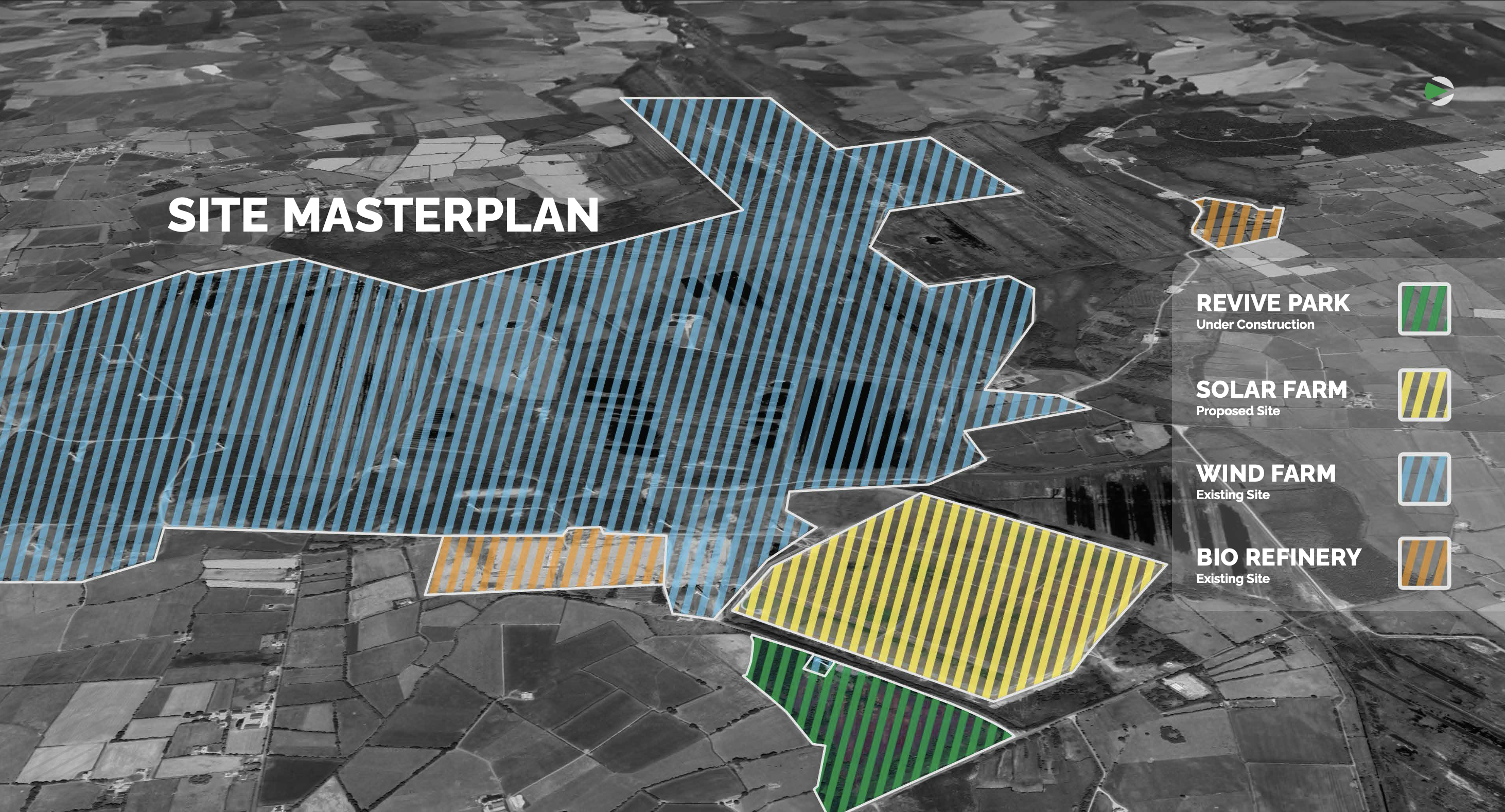
Revive Eco Park, Wind Farm, Solar Farm, and Bio-Refinery - the four anchors of the National Bioeconomy Campus at Lisheen Mine
Measurable results and ambitious targets
2021
The Mid-Tipperary Decarbonising Zone was established in 2021 - one of Ireland's first dedicated regional decarbonisation initiatives, built around community collaboration and measurable targets.
100%
Revive Eco Park operates entirely off-grid - powered by solar and supported by a HVO (Hydrotreated Vegetable Oil) generator. Building one has been fully operational since 2025.
10.8%
The Revive Warrior delivers a 10.8% reduction in total lifecycle carbon emissions over 40 years compared to a standard sewer cleaning truck - verified by Rowan Engineering Consultants (GHG Protocol).
Every truck refurbished through the Revive Program directly reduces demand for virgin steel and new manufacturing. Approximately 54% of a Revive Warrior's component parts by weight are reused across lifecycle cycles - delivering a 43.8% reduction in raw material emissions and a 52.1% reduction in end-of-life emissions over 40 years.
Full overhaul of donor units - tank refurbishment, new chassis remount, upgrades to vacuum, jetting, hydraulic and electronic systems
Building One at Revive Eco Park operates 100% off-grid - solar and supported by a HVO (Hydrotreated Vegetable Oil) generator - since 2025
The Revive Warrior is built for 30+ years across up to four operational cycles - with the 8mm steel tank and galvanised subframe engineered to outlast the chassis
The Mid-Tipperary Decarbonising Zone champions collaboration - working directly with locals, businesses, and stakeholders across the region to create effective, practical climate action plans.
Revive Eco Park is located within the National Bioeconomy Campus at Lisheen Mine - a multi-organisation site designed to host like-minded businesses and institutions committed to sustainable industrial development.
The DZ operates under the Draft Tipperary County Council Climate Action Plan 2024–2029, which outlines specific renewable energy projects for commercial and industrial output. The Zone works across four sectors: residential, commercial, transport, and agriculture.
Our roadmap to a carbon-neutral future
2025
Revive Eco Park's Building One launches as a fully off-grid manufacturing facility - powered by solar and and supported by a HVO (Hydrotreated Vegetable Oil) generator
2026
Large EU companies (250+ employees, €50M+ turnover) begin reporting on 2027 data under the Corporate Sustainability Reporting Directive. Revive's Environmental Credentials support partners in meeting these requirements.
2030
Six sites across Revive Eco Park planned to be fully operational - with the complete campus designed to run entirely off-grid and act as a catalyst for regional green industry.
Every Revive Warrior is built at Revive Eco Park - an off-grid facility at the geographic centre of the Mid-Tipperary Decarbonising Zone. From manufacturing to end-of-life, the Warrior's carbon footprint is independently evaluated by Rowan Engineering Consultants using GHG Protocol methodology. The result: 9.8% fewer lifecycle emissions over 10 years, 10.8% over 40 years, and 54% of component weight reused across cycles. This is not a vision statement. These are verified numbers.