Traditional Model
- Metal Extraction
- Manufacturing
- Operation
- Scrap
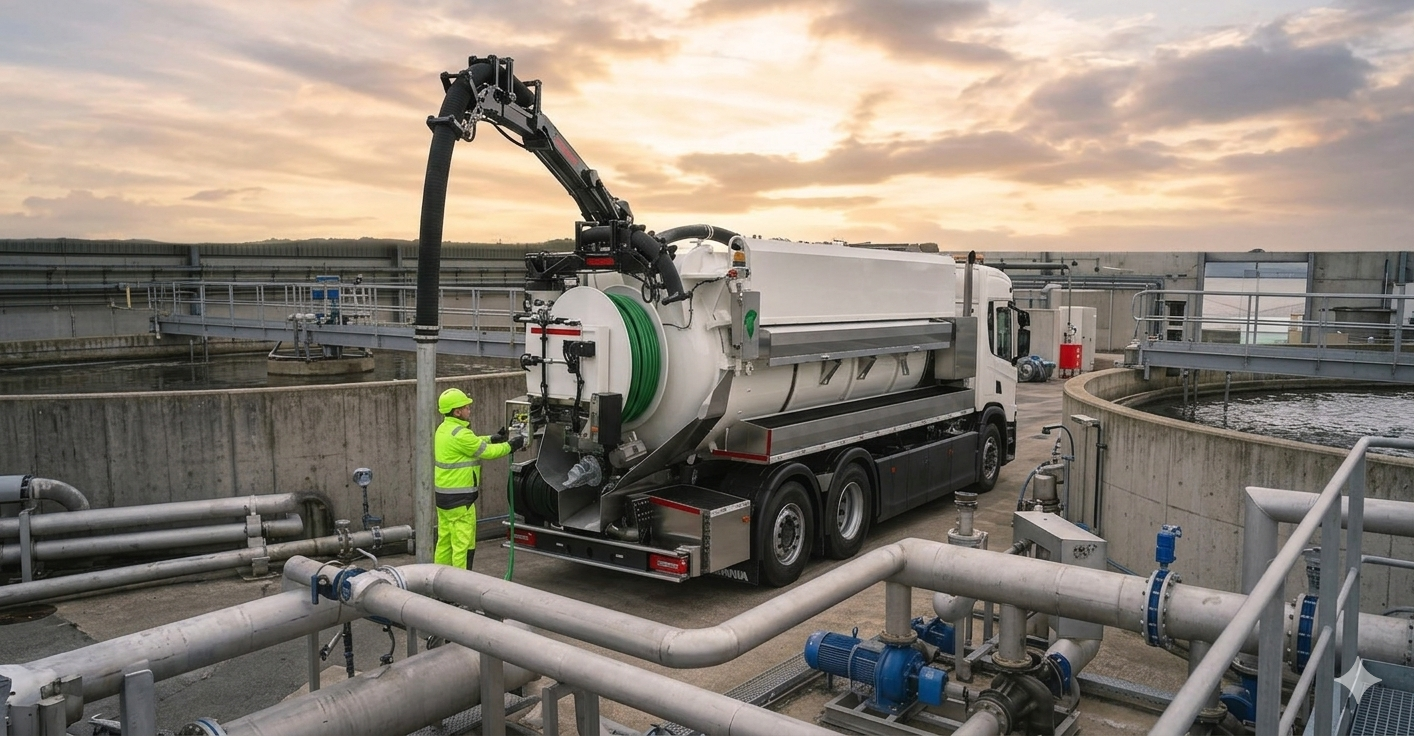
The difference between traditional and Revive approaches
Impact: Over a 40-year lifecycle, the Revive Warrior saves an estimated 20 tonnes of steel from the tank alone - avoiding the ~38 tonnes of CO₂ that would be emitted producing that steel from virgin materials (at 1.9 tCO₂ per tonne of steel).
Our three pillars of circular economy action
A comprehensive overhaul of the donor unit: thorough inspection and assessment, detailed tank refurbishment and painting, upgrades to vacuum, jetting, hydraulic, and electronic systems - performance often surpassing OEM specifications.
The refurbished backend - including the 8mm steel tank and galvanised subframe - is remounted onto a new chassis, extending the unit's service life for another full 10-year cycle without replacing the highest-value components.
Revive's patented Compact Recycling Piston creates a closed-loop system that recovers and reuses wastewater during sewer cleaning operations. If just 10 units are deployed daily, the system can save over 240,000 litres of clean water every hour - nearly 2 million litres per day. Retrofittable to existing units with a 1.8m diameter.
Measurable decarbonisation results
0
Total carbon saved through the Revive Warrior Program over its 30+ year lifecycle (across 3 refurbishment cycles) compared to equivalent new fleet replacements - independently verified by Rowan Engineering Consultants (GHG Protocol).
54%
Approximately 54% of the Revive Warrior's component parts by weight are reused across lifecycle cycles - driving a 52.1% reduction in end-of-life carbon emissions over 40 years.
The Revive Warrior backend - which represents a significant portion of the total unit cost - can be depreciated over an estimated useful life of 20 to 30 years, compared to the standard 8-to-10-year depreciation rate for the chassis. This approach improves reported earnings (EBIT) and increases balance sheet asset value.
25–30%
Discount per Revival Cycle
Provide a suitable end-of-life unit and receive a 25–30% discount on the next lifecycle. No donor unit? Purchase a revived unit at 15% discount, then qualify for 25–30% on every subsequent cycle.
Over 30+ years and up to four cycles, the Revive Program generates carbon credits that can be offset, traded, and - in certain territories - used to offset corporation tax liabilities.
“Through the Revive Warrior Program, the total lifecycle savings reach 539 tonnes of CO₂e per unit, but what does that actually mean? It's the equivalent of 1,918 return flights from Dublin to London, or the annual carbon footprint of 65 average global citizens. Multiply that across a fleet, across decades of refurbishment, and the numbers become transformative.”
All Warrior units now come with
a 3 year warranty as standard.